01
Connect the evidence
Link the claim, repair order, asset, removed part, supplier, policies, images, and diagnostics. Identify missing evidence and existing requests for the same part.
Output: One return context, with requirements and gaps.

Warranty Decision Intelligence
Decide which parts to return, inspect, or retain using claim evidence, failure patterns, and supplier requirements—to reduce unnecessary returns, improve recovery, and uncover quality insights.
Built for OEM service, warranty, claims, returns, and quality leaders.
 VISUAL EVIDENCE · CONNECTED TO THE CLAIM
Physical return only when the evidence or program requires it.
Make the return decision before the shipment
Every return should serve a clear purpose. Circuitry.ai brings claim context, visual evidence, supplier terms, quality signals, and core potential into the decision about what happens next.
Keep the part locally through the required retention period and until all holds are released.
Part identity and visible condition are documented. The approved evidence meets the decision need, with no physical-return requirement or open quality investigation.
Attach findings to the claim, record the return decision, and follow the program’s authorized retention and final-disposition process.
Preserve the component and diagnostic context needed to understand an emerging failure.
A new failure pattern, unresolved cause, affected production lot, or engineering request makes physical testing valuable. Existing sample coverage informs selection.
Coordinate one return request across teams, route it to the approved lab, capture test conditions, and link confirmed findings to the investigation.
Protect the opportunity for recovery by meeting the applicable supplier requirements.
The supplier agreement requires physical evidence, testing, a particular destination, or a defined return window. Digital evidence alone does not satisfy those terms.
Assemble the claim, identifiers, diagnostics, and inspection findings. Track return deadlines, the supplier’s response, accepted amounts, and collection separately.
Consider likely eligibility and net value after warranty, supplier, and quality holds are satisfied.
The part matches an eligible core program. Identity, completeness, condition, potential credit, and processing costs support a remanufacturing assessment.
Confirm authorized release, route to the approved core center, and record actual acceptance and credit. Required physical inspection determines final eligibility.
Illustrative scenarios, not live decisions. Requirements, destinations, approval rules, and actions are configured for each OEM program.
An autonomous warranty parts-return journey
AI Advisors, Analysts, and Agents connect the work across teams and systems. Your policies determine which actions run automatically and which need an expert.
Link the claim, repair order, asset, removed part, supplier, policies, images, and diagnostics. Identify missing evidence and existing requests for the same part.
Output: One return context, with requirements and gaps.
Assess evidence sufficiency, failure patterns, required quality samples, supplier obligations, and core potential. Request more evidence when the decision is uncertain.
Output: Return, inspect remotely, retain, or route for review.
Initiate approved instructions in connected systems, track due dates, and match received parts and documents to the request. Flag identity or quantity discrepancies.
Output: Verified receipt or an actionable exception.
Structure images, video, notes, measurements, and test reports. Preserve observed condition, test method, uncertainty, and findings; compare them with the claimed failure.
Output: Reviewable findings tied to the original claim.
Support claim disposition and supplier responsibility review. Assemble recovery evidence and select authorized retention, supplier transfer, core routing, recycling, or scrap.
Output: Separate claim, recovery, and part-disposition records.
Connect findings across suppliers, lots, product revisions, plants, and field conditions. Help teams investigate recurring issues and improve return selection and repair guidance.
Output: Quality signals and approved process improvements.
Keep the finding unresolved until the available evidence supports the required decision.
Virtual Inspector + Visual Decision Intelligence
Collect the right evidence before a part enters the shipping process. Circuitry.ai Virtual Inspector supports guided image and video capture, while Visual Decision Intelligence connects the findings to the warranty decision.
Images reveal visible evidence. Internal, electrical, intermittent, or material failures may require diagnostics, bench testing, or teardown.
One evidence record. Connected decisions.
Make every finding useful across warranty, supplier quality, engineering, manufacturing, and returns operations—while preserving the status of each outcome.
A quality alert, a claim decision, an accepted recovery, and a physical disposition are separate outcomes. Each keeps its own evidence, owner, and status.
Connect inspection findings with supplier lots, manufacturing plants, product revisions, operating conditions, and repair history. Combine targeted returns with approved representative samples to preserve visibility.
Help teams investigate emerging issues, prioritize corrective action, refine return criteria, and improve service guidance. Confirm root cause and responsibility through the appropriate quality process.
Better evidence. Better recovery economics.
Use AI to interpret approved supplier agreements and connect the applicable terms to each claim and part. Identify what evidence is required, whether a physical return is necessary, and what must happen before the deadline.
An identified recovery opportunity is not yet accepted or collected value.
Core value + remanufacturing
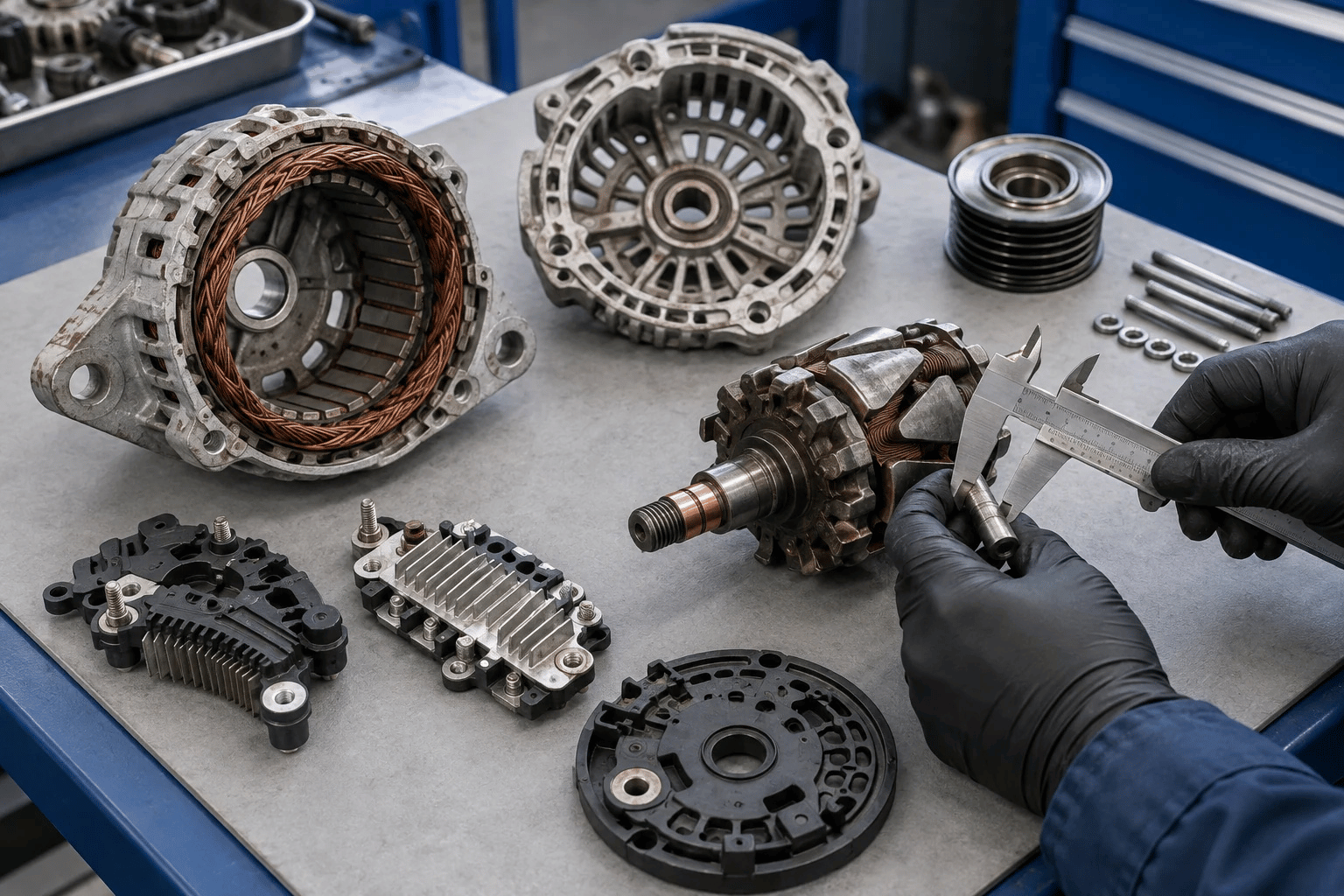
Assess eligible core programs, part identity, completeness, condition, likely credit, and processing costs. Route suitable candidates to the approved remanufacturing channel after evidence needs and retention holds are satisfied.
Keep projected core value separate from accepted credit. Physical inspection and program criteria determine final eligibility and the authorized disposition.
The Circuitry.ai approach
Apply Service Decision Intelligence to the decisions driving return cost, claim outcomes, supplier recovery, and quality learning.
Combine approved policy, the complaint–cause–correction, diagnostics, part identity, visual findings, supplier requirements, and history. Surface missing or conflicting evidence and show the basis for the recommendation.
Advisors guide decisions. Analysts interpret evidence and patterns. Agents request information, route exceptions, and execute authorized actions in connected systems. Confidence, risk, and approval rules govern automation.
Focus on one part family, supplier, region, or return category. Use established AI Workers and your historical data to evaluate decision quality, fewer manual touches, avoided cost, and realized value before scaling.
| OEM priority | What to evaluate | Circuitry.ai approach |
|---|---|---|
| Return selection | Can each return or no-return decision be explained? | Evaluate evidence sufficiency, quality-learning needs, supplier terms, and core potential together. |
| Inspection intelligence | Do findings change the claim and the next action? | Connect visual and test evidence to claim review, supplier recovery, quality findings, and part disposition. |
| Governed autonomy | Which actions complete without manual intervention? | Orchestrate AI Workers across authorized systems with thresholds, approval rules, exception routing, and an audit trail. |
| Decision quality | How are errors, uncertainty, and overrides measured? | Validate against reviewed cases by decision type; monitor missed issues, unnecessary returns, overrides, and rework. |
| Cost and time to value | What improves after all operating and service costs? | Start with a focused scope, align usage-based pricing to decision volume, and measure net benefits using the OEM’s baseline. |
Established providers already offer substantial warranty, returns, inspection, and AI capabilities. Compare the decisions and completed actions that matter for your program.
Public vendor descriptions reviewed October 2026. This is an evaluation framework, not a tested ranking or a claim of universal performance superiority.
Prove the value on your own returns
A lower return count is one measure. Validate the effect on total cost, decision quality, supplier recovery, and the speed of learning about product issues.
Compare historical claims and inspection outcomes with an agreed baseline. Validate in a focused pilot, review exceptions, and expand approved automation as results support it.
Discuss your returns opportunityTrack physical-return rate and freight, handling, inspection, storage, and disposition cost per eligible claim and per returned part.
Measure first signal to confirmed issue, evidence completeness, useful inspection yield, and request-to-disposition cycle time.
Separate identified, accepted, and collected supplier recovery. Track accepted core credit and incremental realized value after the cost to obtain it.
Measure agreement with reviewed reference decisions, false releases, unnecessary returns, human minutes, overrides, and automation within the eligible scope.
OEM questions, answered
No. Images and video can satisfy some evidence requirements and avoid unnecessary shipping. Physical parts remain important for internal testing, unresolved failures, supplier obligations, and quality investigations. The decision is which evidence and examination each case needs.
Findings are matched to the original part and claim, then assessed alongside coverage, repair evidence, diagnostics, and policy. A supported finding may inform an approval, adjustment, or review. “No Trouble Found” alone does not establish that a claim is invalid; test conditions and field evidence may require further investigation.
Better evidence, agreement interpretation, and timely recovery packages can improve recoverability. Physical return is still required where supplier terms or testing demand it. Measure accepted and collected recovery against return and inspection costs to establish the actual benefit.
Circuitry.ai can add decision intelligence across existing claims, service, returns, inspection, ERP, and quality environments through scoped integrations. Define the required data, system updates, and ownership of each action during implementation.
Assess program eligibility, condition, completeness, likely credit, and costs. Confirm required physical acceptance and release any warranty, supplier, quality, or retention holds before an authorized transfer, recycling, or scrap action. Keep estimated value separate from accepted and realized credit.
Start with a defined population and compare AI-supported decisions against reviewed reference outcomes. Track errors by consequence, manual effort, operating cost, and realized recovery. Data readiness, integration scope, and approval requirements determine the path to value.
See Warranty Decision Intelligence in action
See how Circuitry.ai can help your OEM return the right parts, capture stronger evidence, and connect the results to claim, recovery, quality, and core decisions.
Tell us about your organization and the returns decisions you want to improve.
Prefer a separate page? Open the demo request form. View our Privacy Policy.
Program examples inform this page’s decision framework. Each OEM’s current policies and supplier agreements govern its own operations. Photographs and decision illustrations are illustrative.